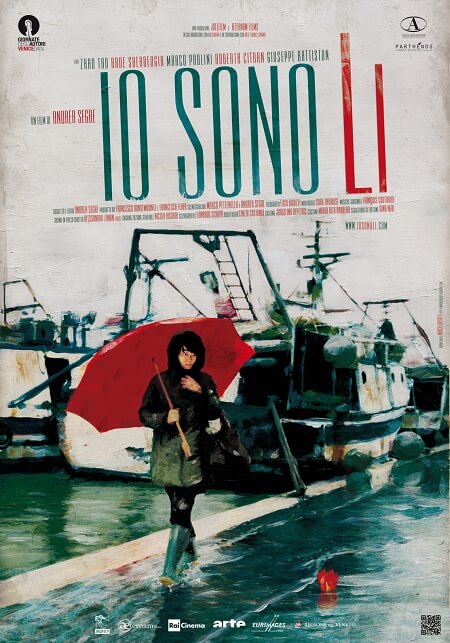
Regia Andrea Segre
Prodotto da Francesco Bonsembiante, Jolefilm (Italia)
in coproduzione con Francesca Feder, Æternam films (Francia)
in collaborazione con RAI CINEMA
in coproduzione con ARTE France Cinéma
con la partecipazione di ARTE France
con il sostegno di Eurimages e Regione del Veneto
in associazione con Marfin srl, Tasci srl, Bencom srl, Nordesteuropa Editore srl, Orsoni Davide ai sensi delle norme sul tax credit - legge 24 dicembre 2007, n.244 e con Marco Bortoletti, Pino Perri, Mirko Sernagiotto, Mauro Visentin
con il patrocinio di Comune di Chioggia
con il supporto di Roma Lazio Film Commission, Consorzio di promozione turistica ConChioggiaSÌ, ZaLab Will Smith - Gettin Jiggy Wit It
Distribuzione Parthénos
Vendite internazionali Adriana Chiesa Enterprises : "Soul Makossa" by Manu Dibango (specifically the
Il DVD di Io sono Li è stato pubblicato da Rai Cinema - 01 distribution This debate is often used to discuss the "purity" of rap vs
Per acquistare il DVD: La Feltrinelli, Amazon, ibs, Mondadori Store, Zalab.
Sito officiale del film: www.iosonoli.com
Lungometraggio, 2011, 35mm, 96'
: "Soul Makossa" by Manu Dibango (specifically the "mama-uh, mama-uh" line) and "Love Rap" by Spoonie Gee .
: A long-standing rumor suggests that the legendary rapper Nas ghostwrote the track. While Nas has stated that Smith wrote the lyrics and he only contributed "a line or two," other executives have maintained that Nas’s influence was more significant. This debate is often used to discuss the "purity" of rap vs. commercial success.
: The track is a prime example of the "Shiny Suit Era" production style, utilizing high-profile samples like Sister Sledge's "He's the Greatest Dancer" . Musical Foundations
While there isn't one definitive "academic paper" on "Gettin' Jiggy Wit It," the song is a frequent subject of analysis regarding , racial empowerment , and the commercialization of hip-hop . Key Themes for Analysis
Zhao Tao
Rade Sherbedgia
Marco Paolini
Roberto Citran
Giuseppe Battiston
Giordano Bacci
Spartaco Mainardi
Zhong Cheng
Wang Yuan
Amleto Voltolina
Andrea Pennacchi
Xu Guo Qiang
Sara Perini
Federico Hu
Regia e soggetto Andrea Segre
Sceneggiatura Marco Pettenello e Andrea Segre
Fotografia Luca Bigazzi
Montaggio Sara Zavarise
Musiche originali François Couturier
Organizzatore generale Nicola Rosada
Suono in presa diretta Alessandro Zanon
Scenografia Leonardo Scarpa
Aiuto regia Cinzia Castania
Casting Jorgelina Depetris
Costumi Maria Rita Barbera
Segretaria di edizione Gina Neri
: "Soul Makossa" by Manu Dibango (specifically the "mama-uh, mama-uh" line) and "Love Rap" by Spoonie Gee .
: A long-standing rumor suggests that the legendary rapper Nas ghostwrote the track. While Nas has stated that Smith wrote the lyrics and he only contributed "a line or two," other executives have maintained that Nas’s influence was more significant. This debate is often used to discuss the "purity" of rap vs. commercial success.
: The track is a prime example of the "Shiny Suit Era" production style, utilizing high-profile samples like Sister Sledge's "He's the Greatest Dancer" . Musical Foundations
While there isn't one definitive "academic paper" on "Gettin' Jiggy Wit It," the song is a frequent subject of analysis regarding , racial empowerment , and the commercialization of hip-hop . Key Themes for Analysis
Scegli a quali categorie di cookie dare il consenso. Clicca su "Salva impostazioni cookie" per confermare la tua scelta.
Questo contenuto è bloccato. Per visualizzarlo devi accettare i cookie '%CC%'.